

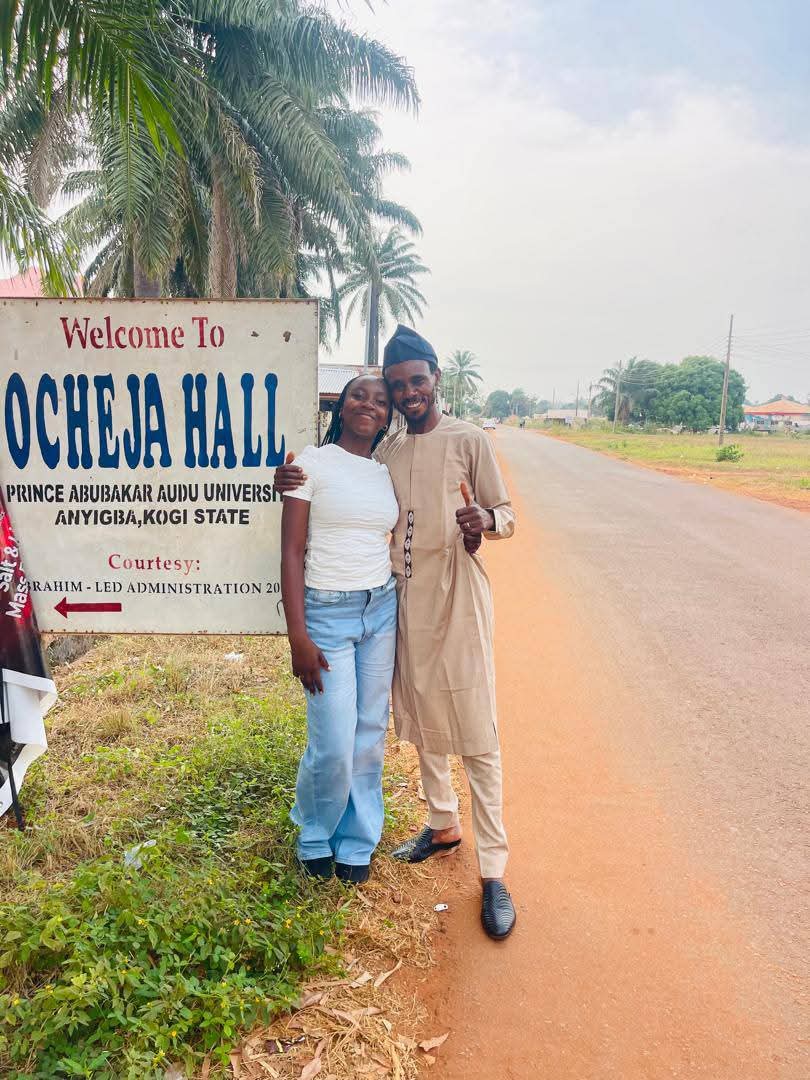
An Eyes Witness Report: by Barrister Salifu Oguche Usman
What was meant to be a season of rest, reunion, and reflection has turned into a journey of pain and alarm.
Like many Nigerians, the Christmas holiday offered me a rare break from the bustle of city life a chance to return home, reconnect with family and kinsmen, and participate in community affairs. Instead, my return to Anyigba, once the pride of the Igala Nation, confronted me with a devastating picture of decay, neglect, and calculated abandonment.
On December 27, 2025, I travelled with my family from Ogugu in Olamaboro Local Government Area to Anyigba to attend the Igala Youths Leadership Assembly conference at the Igala Unity House.
This was my first visit to Anyigba in over a decade.
As someone who studied and graduated from Prince Abubakar Audu University nearly 18 years ago, I carried fond memories of a vibrant, orderly, and fast-growing university town. What I met instead was shocking.
Driving through the town around noon, the signs of collapse were unmistakable.
Roads that once connected communities and commerce are now death traps, riddled with potholes and erosion scars.
The stretch from the Unity House junction through Iyale Road to the old Egume Road is a haunting reminder of a town left to rot.
Anyigba today looks like a place deliberately forgotten by those entrusted with power.
Even more humiliating than the physical decay is the breakdown of order and governance.
The main road from the Catholic Cathedral to Anyigba Market has been completely overtaken by traders. Poultry cages line the road divider, chickens roam freely, and the air is thick with stench.
Traffic is strangled, movement chaotic, and the environment suffocating.
This is not merely underdevelopment; it is the visible collapse of leadership and urban control in what should be a major commercial and academic hub.
A brief stay in Anyigba leaves no doubt that something is fundamentally wrong.
The town has lost its status as the emerging commercial nerve center of the Igala Nation.
Creativity has been stifled, initiative crushed, and urban growth deliberately redirected into disorder.
Electricity supply is abysmal, sanitation almost nonexistent, and planning virtually absent.
What stands out is a strong perception that this decline is not accidental.
There is a growing belief among the people that Anyigba and indeed Igala land has been subjected to a sustained policy of neglect by successive Kogi State administrations, particularly from the era of Alhaji Yahaya Bello to the current government of Alhaji Usman Ahmed Ododo.
Many see this as a vendetta against Kogi East and the Igala Nation, a people whose numerical strength once translated into political influence and democratic advantage.
Today, that influence appears to be punished through deprivation.
This alleged pattern of governance manifests in the systematic starvation of Igala land of infrastructure, the exclusion of its people from political and economic opportunities, and the imposition of ill-prepared leadership across local governments.
The result is distrust between leaders and the led, deepening insecurity, worsening poverty, and accelerating decay.
After the conference at the Igala Unity House where the respected retired AIG Abutu Yaro delivered a thought-provoking lecture on the challenges confronting Igala youths I decided to visit my alma mater, Prince Abubakar Audu University.
I wanted to show my children the institution that shaped my formative years and the hall of residence where I spent five memorable years.
What awaited me compounded my sorrow.
Entering the university through the Ankpa Road, the Senate Building stood exactly as it was two decades ago same structure, same faded paint, a silent relic of the era of Professor Francis Suleiman Idachaba. Lecture theatres, laboratories, and hostels wear the same tired look of neglect: peeling paint, broken windows, and decaying facilities.
Inikpi Hostel, in particular, is an eyesore, barely habitable except for a lone intervention project struggling to mask widespread deterioration.
Even more disturbing is the invasion of the campus by unregulated kiosks, choking the serenity expected of an ivory tower.
The once proud academic environment now struggles under disorder and neglect.
My visit to Isah Ocheja Hall, my former residence, was heartbreaking.
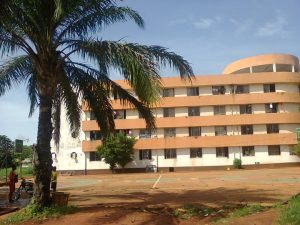
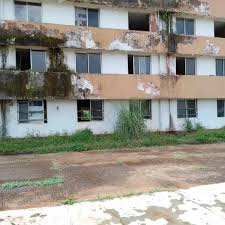
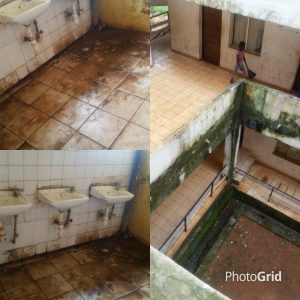
I had hoped to show my children a place of pride and fond memories. Instead, I met a structure gasping for survival broken doors, shattered windows, faded walls, and despair written all over it.
Yet students still endure these conditions, trapped by a system that has failed them.
That night, as I stayed at the university quarters, my thoughts were heavy.
I remembered the glory days of Kogi State University under Prince Abubakar Audu and the pioneering leadership of Professor Simon Koma Okwute.
I recalled a time when students had direct access to government, when complaints were addressed swiftly, and when the university symbolized excellence, order, and hope.
All of that now feels like a distant memory.
While the establishment of additional state universities in Osara and Kabba may be commendable, it is difficult to ignore the perception that this expansion came at the deliberate expense of Prince Abubakar Audu University simply because it is located in Anyigba and identified with the Igala people.
More troubling is the persistent exclusion of the Igala Nation from leadership of all state owned universities and even the Federal University, Lokoja, despite having a majority population and an abundance of qualified academics.
To many, this looks like a calculated attempt to weaken and impoverish an entire people.
I woke up in Anyigba on December 28, 2025, burdened with unsettling reflections about leadership, justice, and accountability.
How can those entrusted with power forget that leadership is stewardship? How can a government deliberately embrace underdevelopment as policy?
How can the fate of communities be sacrificed on the altar of political bitterness?
As I continued my Christmas holiday, these questions lingered, fueling prayers for divine intervention in Nigeria’s electoral process so that power may truly return to the people, and communities like Anyigba may yet be rescued from this slow, painful death.
The cry from Anyigba is no longer a whisper. It is a loud lament, a warning, and a call for urgent attention.
Wishing everyone a reflective, prosperous, and hopeful 2026.
